


Commercial Flagpole Delivery & Crane Planning Checklist
Commercial Flagpole Delivery & Crane Planning Checklist
Direct answer: A commercial flagpole delivery should be planned as a site-coordination activity, not simply a freight drop. Before shipment arrives, the project team should confirm access, unloading responsibility, crane scope, protected staging space, approved lifting information and the sequence between civil work and erection.
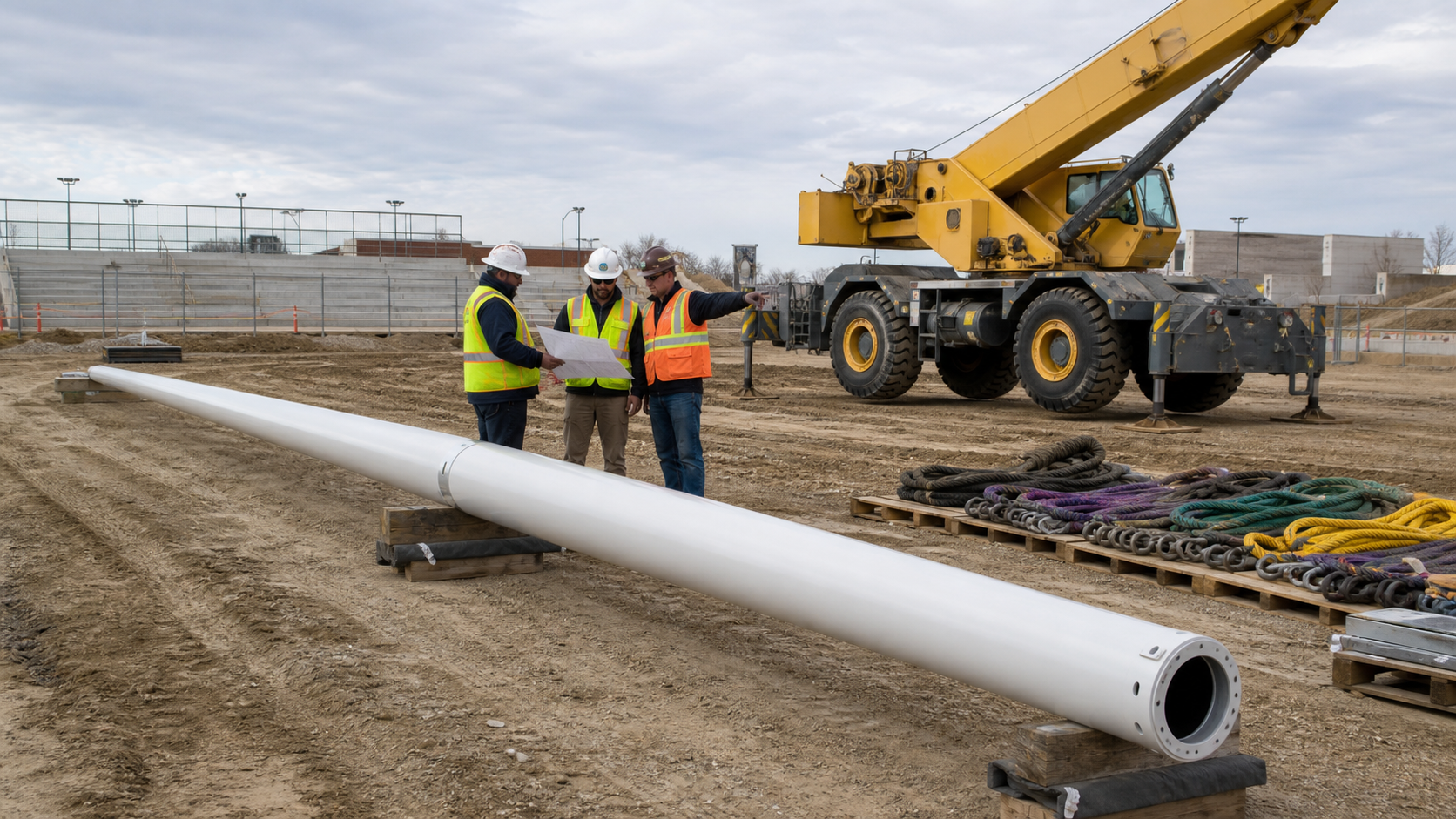
1. Start With a Delivery Responsibility Map
Assign one project contact for delivery timing and one competent party for unloading and lift coordination. The supplier can confirm shipment dimensions, package information and available handling points. The contractor or lift provider should confirm that the planned equipment, access route, ground condition, exclusion zone and lift method are suitable for the actual site.
Do not assume the carrier, supplier, general contractor and crane company share the same scope. Record who receives the truck, who checks the shipment, who provides unloading equipment and who authorizes any schedule change.
2. Confirm Truck Access Before Dispatch
A tapered flagpole shaft can be long, sensitive to handling damage and difficult to reposition after arrival. Review the approach road, turning area, gate width, overhead obstructions, parking restrictions and the route from unloading point to the protected staging area. Temporary work, other deliveries and public traffic can change the site condition between booking and delivery day.
- Confirm the delivery address, receiving contact and permitted arrival window.
- Check vehicle access, turning radius, overhead clearance and gate restrictions.
- Keep the unloading route clear of loose material, parked equipment and unplanned storage.
- Escalate any site-access change before the shipment is loaded.
3. Separate Product Information From the Lift Plan
Product documents and lift planning serve different purposes. A supplier may provide the pole configuration, shipment data, approved handling information and any relevant installation documents. The responsible lift party develops and approves the lift plan, including crane selection, rigging, setup location, ground support, exclusion controls and site-specific safety requirements.
For work in the United States, the project team should review applicable local requirements and the relevant OSHA crane and derrick construction requirements. This article is a coordination guide and does not replace a competent lift plan or local safety review.
4. Prepare a Protected Staging Area
Plan a level, controlled staging area close enough to the erection point to avoid unnecessary secondary handling. Support the shaft on padded timber or other approved dunnage so it is kept clear of standing water, abrasive debris and vehicle traffic. Protect visible finishes and keep components, hardware and packing labels together for receiving inspection.
| Before Arrival | Project Team Check |
|---|---|
| Delivery vehicle details | Access route, gate and receiving window are confirmed. |
| Flagpole shipment information | Receiving team can identify all packages and check for visible damage. |
| Crane and rigging scope | Responsible lift party has reviewed site conditions and controls. |
| Staging location | Level supports, protection and access control are in place. |
5. Check the Civil and Erection Sequence
Coordinate the delivery date with the approved foundation, anchor interface, concrete curing requirements and erection schedule. The delivered base connection information should match the approved project submittal before work proceeds. The responsible engineer or project authority determines whether site conditions and foundation readiness are acceptable for erection.
For related specification guidance, see Commercial Flagpole Components: A Specifying Guide and Stadium Flagpole Control Systems.
6. Receive and Inspect the Shipment
Before signing freight documents, compare the visible shipment condition with the packing list. Photograph any damaged packaging, missing labels or apparent finish damage and notify the appropriate party promptly. Keep loose accessories, winch-related components and installation hardware in a controlled location until the approved erection sequence requires them.
7. Ask These Questions Before You Request a Quote
- What product dimensions and shipment information will be needed for site logistics?
- Which handling points or handling instructions accompany the delivered configuration?
- Who is responsible for crane selection, rigging and lift approval?
- Where will the pole be staged, and how will the finish be protected?
- What approved information must be checked before erection?
When requesting a commercial flagpole quotation, send the project location, intended installation date, configuration, site access constraints and any known coordination requirements. Fortune Pole can provide product and shipment information for submittal coordination; the project team remains responsible for site review, lifting operations and final acceptance.
8. Frequently Asked Questions
Who coordinates the crane plan for a commercial flagpole?
The party responsible for the lift should coordinate crane selection, access, rigging and lift controls. The purchaser can provide product dimensions and delivery information, while the project team confirms site conditions and the approved lifting method.
What should a supplier send before delivery?
The supplier should provide confirmed shipment data, package identification and available product handling information for the ordered configuration. The project team should review those documents alongside the site logistics and erection plan.
Can the flagpole be stored on bare ground?
No. Store the shaft on protected supports that keep it clear of standing water, abrasive material and vehicle traffic. Use a controlled staging area until the responsible team is ready for erection.
9. References