


Commercial Flagpole RFQ Checklist
Commercial Flagpole RFQ Checklist: What to Send Before Requesting a Quote
Short answer: A useful commercial flagpole RFQ gives the supplier enough project information to identify the requested product scope, base interface, delivery needs and required documents. A vague request may produce a preliminary price, but it can leave important technical and site assumptions unresolved.
The goal is not to create a long procurement package. It is to provide the few inputs that let every supplier quote the same project requirement.
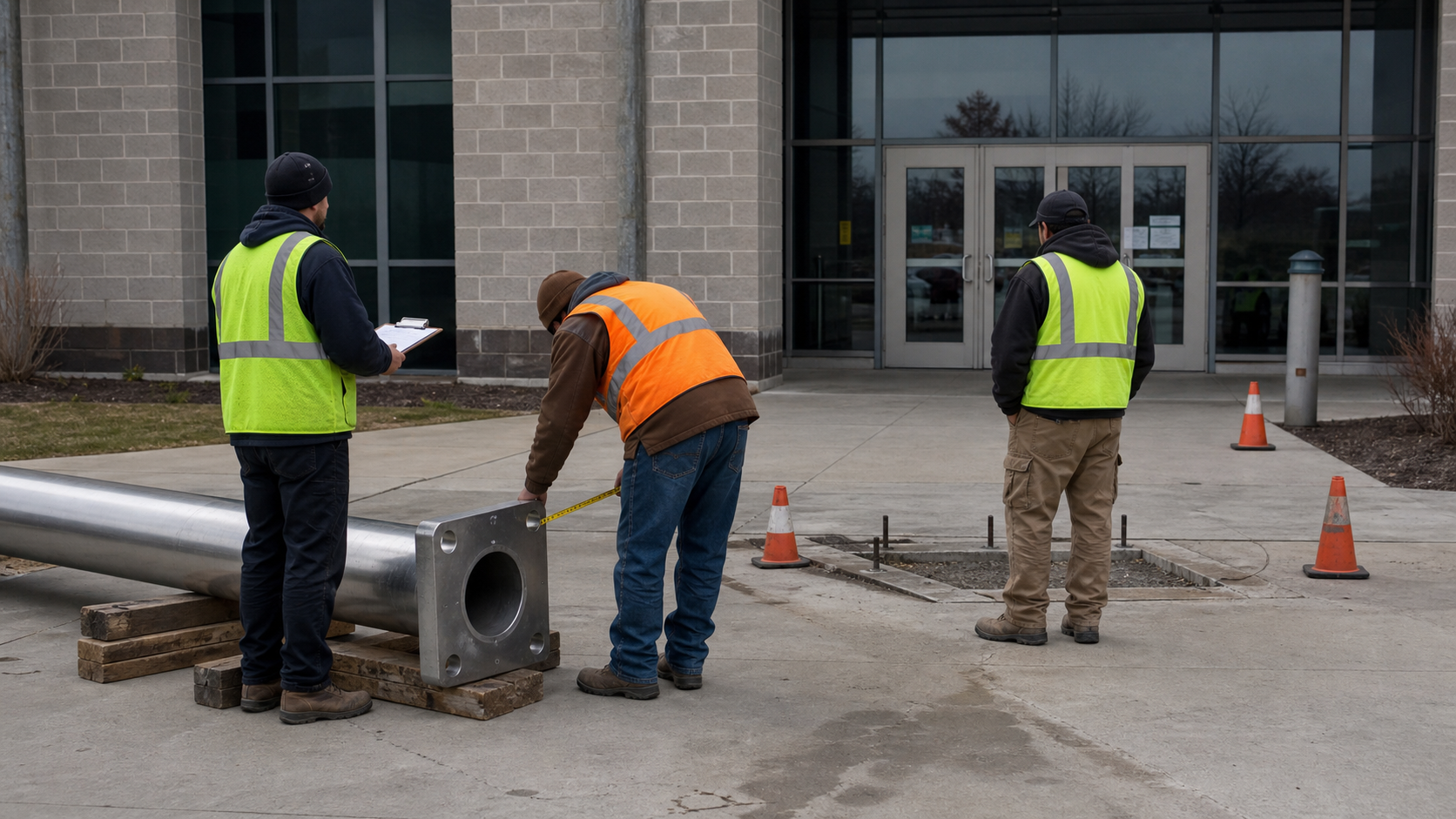
1. Separate a Budget Estimate From a Project RFQ
A budget estimate may start with only a height range and a destination country. A project RFQ needs more detail because the supplier must understand what is included, what is excluded and which party is responsible for each interface.
State whether you need an early budget, a quotation for tender, or a release-ready commercial proposal. This helps prevent an early assumption from being treated as a final requirement.
2. Describe the Use and Site Conditions
Start with the application: government facility, commercial entrance, hotel, school, stadium, industrial site or another project type. Then provide the installation location, available site drawings, expected wind exposure where known, and any local approval or design-review requirement.
Do not invent site information. If a foundation, wind or access detail is still under review, identify it as pending in the RFQ.
3. Define the Requested Flagpole Configuration
Describe the intended pole rather than using only a generic phrase such as “commercial flagpole.” Useful inputs include material preference, approximate height, finish, number of poles, flag arrangement, internal or external halyard preference, and required accessories.
- Aluminum, stainless steel or another specified shaft material.
- Single pole, grouped poles or a special arrangement.
- External halyard, internal halyard or an electric-operated system if required.
- Finish and color requirements where available.
- Required accessories such as trucks, cleats, winches, counterweights or flags.
4. Include the Foundation and Anchor Interface
The supplier needs to know whether the project already has an approved foundation detail, whether anchor bolts are included in scope, and who is responsible for concrete work and installation. A foundation drawing is more useful than a verbal description.
Final foundation design, site conditions and structural approval remain the responsibility of the appropriate project engineer or authority. The supplied flagpole base information should be coordinated with the approved project detail before release.
5. Provide Delivery and Handling Inputs
Long flagpole sections can affect packaging, transport routing, unloading and site handling. Include the delivery city and country, requested Incoterm if known, site access constraints, unloading equipment, preferred delivery date and any project-specific packaging requirement.
6. State the Required Documents
Tell suppliers what you need for review before order release and before shipment. Depending on the project, this can include product drawings, component lists, packing information, inspection records, material or finish documents, and shipping documents.
List only the documents the project actually requires. A supplier should not imply that a document proves compliance with a requirement it does not address.
| RFQ Input | Why It Helps | If Not Yet Known |
|---|---|---|
| Project location and use | Sets the commercial and site context. | State the target market and intended application. |
| Pole configuration | Defines the requested product scope. | Give a height range and material preference. |
| Foundation interface | Avoids base and anchor assumptions. | Mark it as pending engineering review. |
| Delivery details | Supports packaging and logistics planning. | Provide city, country and preferred delivery window. |
| Required submittals | Sets the document-review expectation. | Send the tender or consultant document list. |
7. Use This RFQ Checklist
- Project name, location and intended application.
- Number of flagpoles and requested height range.
- Preferred shaft material, finish and flag arrangement.
- Internal, external or electric-operated halyard requirement.
- Available drawings, specifications and approval requirements.
- Foundation status, anchor interface and installation responsibility.
- Delivery destination, Incoterm, timing and unloading constraints.
- Required drawings, records and shipping documents.
8. Frequently Asked Questions
What should I include in a commercial flagpole RFQ?
Include the project use, location, requested pole configuration, available drawings, foundation interface, delivery destination, installation scope and required submittals.
Can a supplier quote a flagpole without foundation information?
A preliminary quote may be possible, but missing foundation and site details can limit accuracy. Confirm the final base connection, anchor interface and project responsibilities before release.
Who approves the final flagpole configuration?
The buyer and responsible project team should review the supplier submittal against current project requirements. Final approval follows the project process and applicable authority requirements.
9. References
Ready to prepare an RFQ? Fortune Pole can review the available project inputs and identify the product, base-interface and delivery details needed for a clearer quotation. Final engineering, code review and project approval remain with the responsible project team.