


Stainless Steel vs Aluminum Commercial Flagpoles: Material Selection Guide
Stainless Steel vs Aluminum Commercial Flagpoles: Material Selection Guide
Short answer: aluminum flagpoles are often the practical choice for standard commercial sites that need lower weight, easier handling and controlled initial cost. Stainless steel flagpoles are often preferred for coastal, premium architectural, high-rigidity or long-service projects where corrosion resistance and appearance stability matter more.
Procurement takeaway: do not choose a commercial flagpole material by appearance alone. Compare site exposure, wind requirement, height, wall thickness, finish, maintenance plan, shipping method and project approval documents.
Why Material Selection Matters
A commercial flagpole is an exposed vertical structure. It must handle wind load, flag movement, weather, surface wear, cleaning cycles and long-term outdoor exposure. The material affects not only the purchase price, but also foundation design, transport weight, installation handling, finish appearance and maintenance planning.
For B2B buyers, the best material is the one that matches the site. A hotel entrance, coastal resort, school campus, stadium, government plaza and industrial facility may all require different material choices even when the visible flagpole height looks similar.
Aluminum Commercial Flagpoles
Aluminum flagpoles are widely used in commercial projects because they are lightweight, corrosion resistant in many inland environments and efficient to manufacture. Aluminum also reduces handling pressure during transport and installation, especially for standard commercial heights.
For many schools, hotels, office buildings, retail centers and corporate campuses, aluminum provides a strong balance between budget, appearance and field practicality. Common finish options include satin brush, anodizing, powder coating and custom color coating.
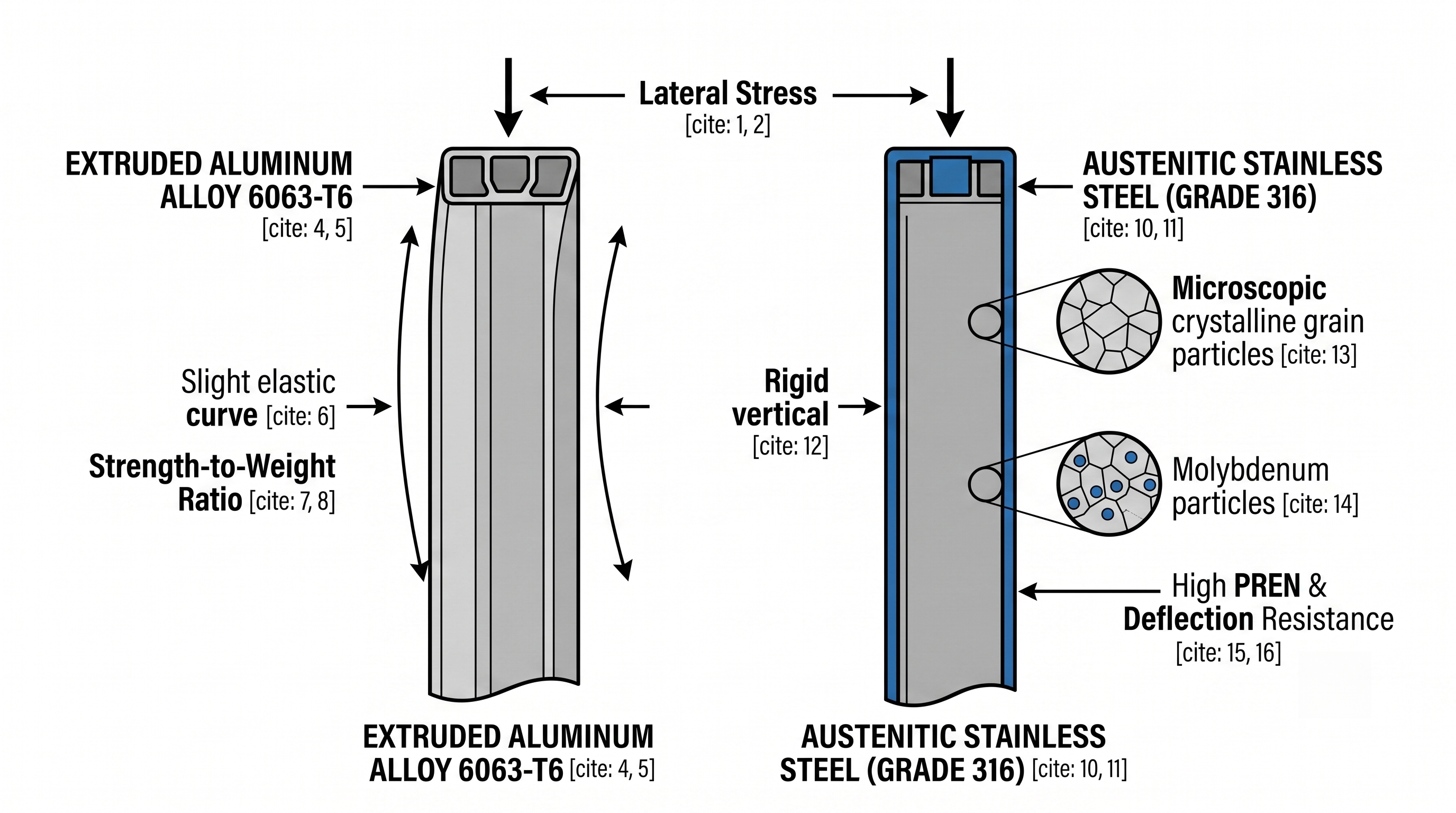
The main limitation is stiffness. Aluminum has lower rigidity than steel, so taller poles may require larger base diameters, suitable wall thickness and careful engineering review. In coastal or chloride-rich environments, the finish system and isolation from dissimilar metals should also be checked.
Stainless Steel Commercial Flagpoles
Stainless steel flagpoles are often selected for premium architectural projects, coastal locations, high-visibility entrances and installations where long-term appearance is important. Stainless steel has a higher stiffness than aluminum, which can help reduce visible deflection when the pole is designed correctly.
Grade 304 stainless steel is commonly considered for general commercial and architectural environments. Grade 316 stainless steel is often considered for coastal, marine, high-humidity or chloride-exposed sites because its molybdenum content improves resistance to pitting and staining compared with 304 stainless steel.
The tradeoff is cost and weight. Stainless steel usually requires higher material investment, more demanding fabrication, careful welding control and heavier handling. For this reason, stainless steel is most valuable when the project needs durability, premium finish, coastal resistance or a specific architectural appearance.
Comparison Matrix
| Selection Factor | Aluminum Flagpole | 304 Stainless Steel Flagpole | 316 Stainless Steel Flagpole |
|---|---|---|---|
| Best fit | Standard commercial buildings, schools, hotels and inland sites | Premium architectural projects and general urban sites | Coastal, marine, humid or chloride-exposed locations |
| Weight | Lower weight, easier transport and handling | Heavier than aluminum | Heavier than aluminum |
| Rigidity | Good for many projects when diameter and wall thickness are suitable | Higher stiffness and reduced visible deflection | Higher stiffness with stronger corrosion resistance |
| Corrosion resistance | Strong in many inland environments with suitable finish | Good for many architectural environments | Preferred where chloride exposure is a major concern |
| Budget profile | Usually lower initial material and handling cost | Higher initial investment | Highest material investment, useful for demanding environments |
Corrosion and Surface Finish
Aluminum forms a natural oxide layer and can perform well outdoors when the correct finish is selected. However, coastal salt, industrial pollution and contact with dissimilar metals can create localized corrosion risk. For aluminum flagpoles, buyers should review anodizing, powder coating, sealing quality and isolation washers for mixed-metal contact points.
Stainless steel resists corrosion through its chromium-rich passive layer. In coastal or high-humidity locations, 316 stainless steel is often selected because it performs better than 304 stainless steel against chloride-related pitting and staining. Even stainless steel still needs practical cleaning in salt-heavy environments, especially when appearance is important.
Cost and Lifecycle View
Aluminum usually has a lower initial cost and is easier to transport, which can make it attractive for standard commercial orders and multi-pole projects. Stainless steel usually costs more at the beginning, but can be a better fit when the site demands premium appearance, stronger surface durability or coastal resistance.
For procurement teams, lifecycle cost should include product price, shipping, installation handling, finish maintenance, cleaning access, replacement hardware and the risk of selecting the wrong material for the environment. A lower first quote is not always the lower project cost.
Documents to Request Before Material Approval
- Material grade, such as aluminum alloy, 304 stainless steel or 316 stainless steel.
- Flagpole drawing with height, diameter, wall thickness, base detail and hardware layout.
- Finish specification, including brushing, polishing, anodizing, powder coating or painting.
- Wind-load assumptions and recommended flag size where applicable.
- Foundation or anchor detail for local engineer review.
- Hardware material details for truck, finial, cable, cleat, winch, fasteners and access door.
- Maintenance guidance for cleaning, surface care and replacement parts.
How Fortune Pole Supports Material Selection
Fortune Pole manufactures aluminum flagpoles, stainless steel flagpoles and commercial flagpole systems for project buyers. When buyers provide the site environment, height requirement, finish preference, flag size, wind condition and delivery destination, Fortune Pole can help prepare a more practical material and configuration proposal.
This is useful for contractors, distributors, developers and project owners who need more than a standard catalog selection. A project-specific material review can reduce the risk of over-specifying an expensive material or under-specifying a pole for a demanding environment.
Related resources include Fortune Pole commercial flagpole articles and commercial flagpole component guidance.
FAQ
Is stainless steel better than aluminum for commercial flagpoles?
Stainless steel is often preferred for coastal, premium architectural or high-rigidity projects. Aluminum is often better for standard commercial sites that need lower weight, easier handling and controlled initial cost.
When should a project specify 316 stainless steel?
316 stainless steel is usually considered for coastal, marine, high-humidity or chloride-exposed sites where stronger pitting and staining resistance is important.
Are aluminum flagpoles suitable for commercial projects?
Yes. Aluminum flagpoles are widely used for commercial buildings, schools, hotels and corporate sites when the height, wall thickness, finish and wind-load assumptions match the project.
What documents help compare stainless steel and aluminum flagpoles?
Useful documents include material grade, shaft drawing, diameter, wall thickness, finish specification, hardware layout, foundation detail, wind-load assumption and maintenance guidance.
Can aluminum look similar to stainless steel?
Aluminum can be mechanically polished, brushed, anodized or coated for a bright metallic look, but it should still be evaluated as aluminum for strength, stiffness and corrosion behavior.
References