


Flagpole Export Logistics Guide
Flagpole Export Logistics Guide
Exporting a long seamless flagpole requires coordination between manufacturing, ocean freight, packaging, customs, inland transport and site lifting. The correct logistics plan depends on the shaft length, weight, finish, transport route, port equipment, road clearance and destination-site conditions.
- Select freight equipment according to actual dimensions, weight and carrier approval.
- Protect architectural finishes against impact, abrasion, moisture and salt exposure.
- Confirm whether wooden packaging requires ISPM 15 treatment and marking.
- Prepare a lifting plan based on the crate, shaft, crane and sling capacities.
- Coordinate customs documents, inland transport and site access before dispatch.
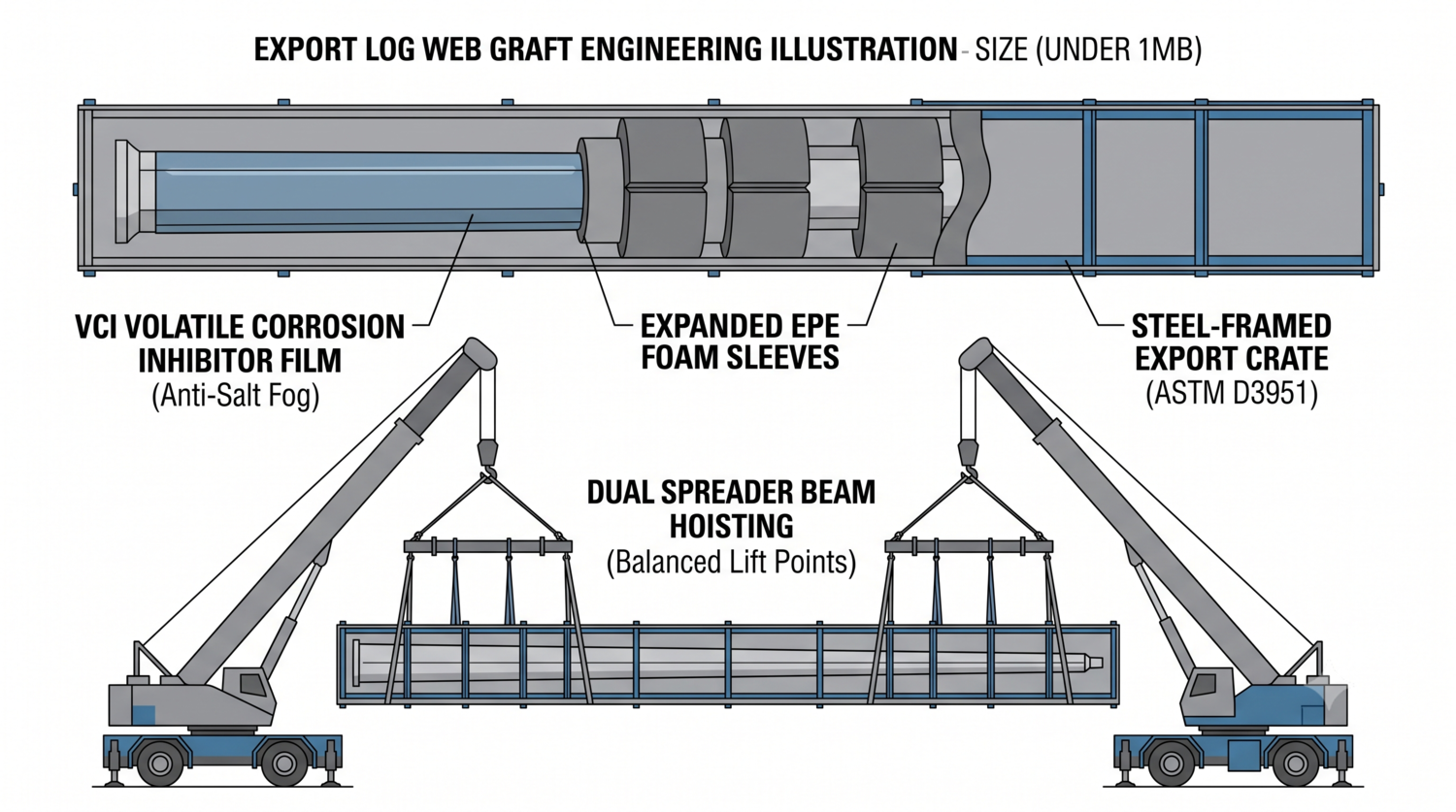
1. Begin With a Transport Feasibility Review
Before production is finalized, confirm the total shaft length, packed dimensions, gross weight, center of gravity, lifting points and transport route. The logistics team should review factory access, port handling, vessel options, destination-port equipment, road restrictions and the final site.
Very long shafts may require open-top containers, flat racks, platform equipment, breakbulk service or another carrier-approved solution. The correct choice depends on the actual cargo profile and the shipping line’s acceptance rules. Container names and nominal lengths should not be treated as a universal loading guarantee.
2. Select Freight Equipment
Shorter cargo may fit standard or open-top equipment when the packed dimensions remain within the carrier’s limits. Over-length cargo may require a flat rack or platform arrangement. Monumental shafts may require project cargo or breakbulk handling.
The booking request should include shaft length, maximum diameter, packing dimensions, gross weight, lifting points, lashing requirements, cargo value and any restrictions on stacking or weather exposure. Obtain written confirmation from the carrier or freight forwarder before dispatch.
3. Protect the Surface Finish
Stainless steel, anodized aluminum and coated surfaces can be damaged by impact, rubbing, trapped moisture and salt during transport. Packaging should be designed for the actual finish and voyage conditions.
A typical protection system may include a clean inner surface, compatible VCI material where appropriate, foam or rubber contact points, moisture protection, timber saddles and an outer crate or frame. Packaging materials should not react with the finish or leave residues.
4. Use VCI and Moisture Protection Correctly
VCI film can support corrosion protection inside a properly sealed package, but it does not replace dry packing, inspection, desiccant planning or control of condensation. The packaging team should confirm compatibility between the VCI product, metal finish, coating and voyage duration.
Packages should be inspected before sealing. Record the metal condition, finish, protective materials, desiccant, package identification and sealing date. Do not open sealed VCI packaging unnecessarily during transit or storage.
5. Design the Crate and Supports
Crates, saddles and cross-members should support the shaft without creating concentrated pressure or coating damage. The design should account for lifting, vibration, lashing, port handling, temporary storage and possible weather exposure.
Steel frames can provide rigidity for some large packages, while treated timber may be suitable for other shipments. If wood packaging or dunnage is used, confirm the destination country’s ISPM 15 requirements and marking rules before packing.
6. Plan Site Offloading
Offloading must be planned from the actual delivery vehicle or vessel to the final storage or foundation area. The lifting plan should identify total weight, center of gravity, approved lifting points, sling angles, spreader beams, crane capacity, ground conditions and exclusion zones.
Long shafts may require two cranes or a spreader-beam system, but this cannot be decided from length alone. A qualified lifting supervisor should approve the method and confirm that slings, shackles, beams and cranes are rated for the planned operation.
7. Unpack Without Damaging the Finish
Remove the outer crate in a controlled area with sufficient clearance. Keep tools away from the finished surface and avoid dragging the shaft across the ground. Cut protective film with procedures that prevent contact with the metal or coating.
After unpacking, inspect the shaft for dents, scratches, moisture, corrosion, displaced supports and missing accessories. Photograph and record any damage before moving the product to the foundation.
8. Export Logistics Matrix
| Cargo profile | Possible transport option | Packaging focus | Site review |
|---|---|---|---|
| Standard-length shaft | Standard or open-top equipment if accepted | Foam, moisture protection and suitable crate | Forklift or crane access |
| Over-length shaft | Flat rack or platform equipment | Rigid supports, lashing and weather cover | Road clearance and lifting plan |
| Monumental project cargo | Breakbulk or project cargo service | Engineered saddles, frame and corrosion control | Port crane and tandem-lift review |
9. Customs and Delivery Documents
- Commercial invoice and packing list.
- Bill of lading or other transport document.
- Certificate of origin when required.
- Wood packaging treatment or ISPM 15 documentation where applicable.
- Product dimensions, weights, lifting points and package photographs.
- Material certificates and finish records when requested by the project.
- Insurance, import permits and destination-specific documents where required.
Frequently Asked Questions
Is breakbulk shipping always required for a long flagpole?
No. The transport method depends on packed dimensions, weight, carrier acceptance, route, port equipment and cost. A freight forwarder should confirm the suitable option for the actual cargo.
Does VCI film replace all other corrosion protection?
No. VCI is one part of a packaging system. Dry conditions, compatible materials, sealing, inspection and moisture control are also important.
Can a single crane unload every seamless flagpole?
No. The lifting method depends on weight, center of gravity, length, rigidity, site access and crane capacity. Long cargo may require spreader beams, two cranes or another engineered method.
What should be checked after unpacking?
Check the surface finish, moisture, corrosion, dents, scratches, supports, accessories and identification marks. Record any damage before installation.
References
- ASTM D3951 Commercial Packaging
- ISO 1496-1 Series 1 Freight Containers
- ISPM 15 Wood Packaging Requirements
For export shipping quotes, packing drawings and delivery coordination, visit Fortune Pole.