


Commercial Flagpole Maintenance Guide
Commercial Flagpole Maintenance Guide
Commercial flagpoles are exposed to wind, rain, ultraviolet radiation, salt, dust and repeated mechanical movement. A planned maintenance program helps facility managers identify wear in the rigging, winch, revolving truck, base connection and finish before a minor issue becomes an operational or safety problem.
- Inspect moving rigging and access hardware at intervals suited to the site.
- Check cables, winches, revolving trucks, snaphooks and counterweights for wear.
- Review the base flange, anchor area, grout and drainage after severe weather.
- Lower flags when wind conditions exceed the approved operating limits.
- Record inspections, repairs, replacement parts and unresolved defects.
1. Create a Site Maintenance Plan
The maintenance plan should identify the flagpole type, access method, installation date, materials, finish, operating equipment and exposure conditions. Coastal, desert, industrial and high-wind sites may require more frequent inspections than sheltered locations.
Facility teams should keep the original drawings, installation instructions, equipment manuals, approved load criteria and previous inspection records. The manufacturer’s instructions and the project engineer’s requirements should take priority over a generic checklist.
2. Inspect Halyards, Cables and Flag Hardware
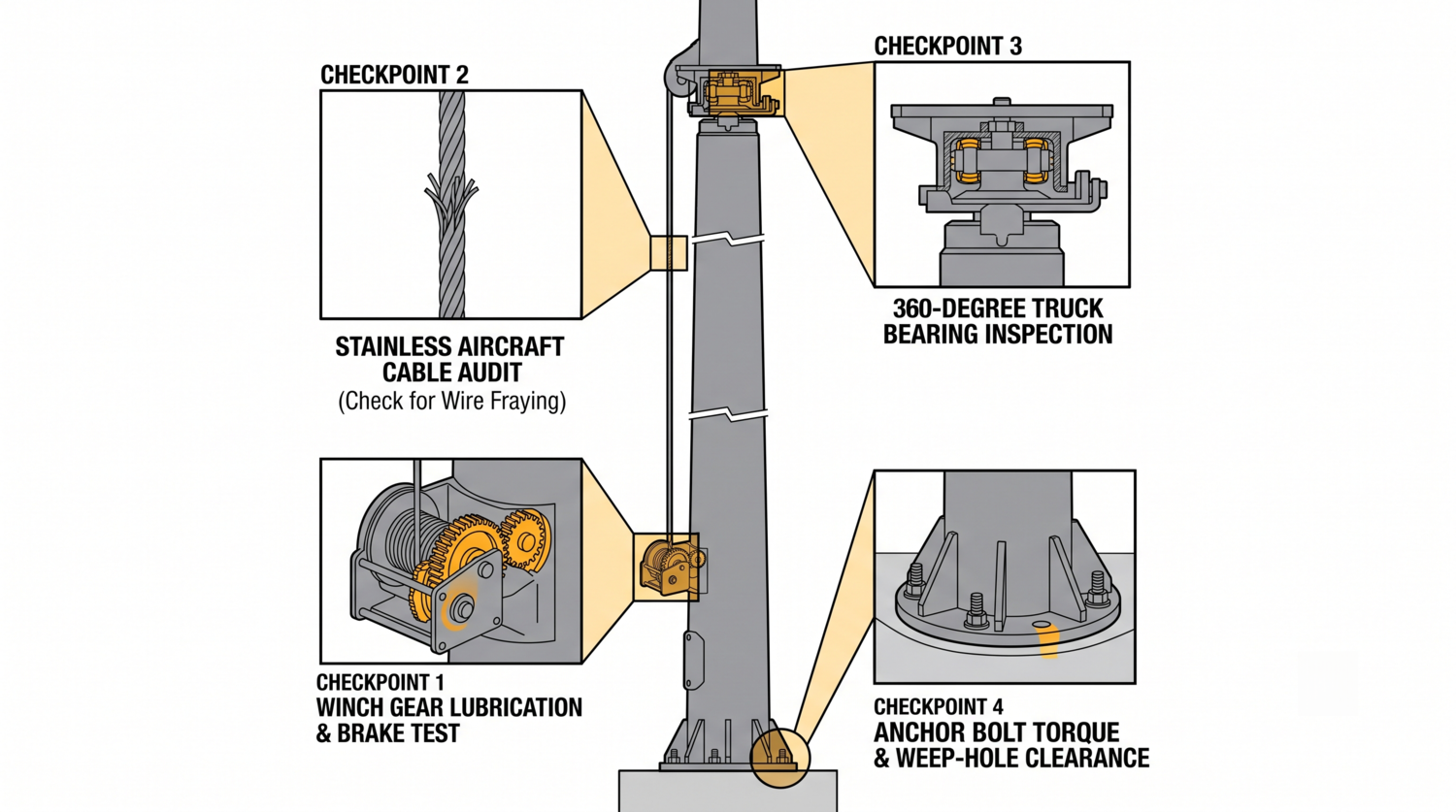
Inspect the full accessible length of the halyard or wire rope for broken wires, kinks, flattening, corrosion, strand separation and abnormal wear at sheaves or entry points. A damaged cable should be removed from service and evaluated by a qualified technician.
Also check snaphooks, shackles, swivels, counterweights and flag attachments. Hardware should move freely, remain properly secured and match the intended cable size and load. Do not continue operating a system when the cable or attachment hardware shows damage that could cause a dropped flag.
3. Service Internal Winches and Hoists
For internal winches, inspect the access panel, fasteners, drum, handle, gear train, brake and cable winding pattern. The brake should hold the intended load according to the manufacturer’s instructions. Any slipping, binding, unusual noise or uneven winding requires service before continued operation.
Use only the lubricant specified for the equipment and environment. Keep lubricants away from cable surfaces unless the product instructions permit application. In dusty or sandy locations, excessive grease can collect abrasive particles and increase wear.
4. Check the Revolving Truck and Finial
The top revolving truck should rotate smoothly when the system is designed for free flag movement. Inspect the spindle, bearings, pulley, finial connection and visible fasteners for looseness, binding or water entry.
Do not force a seized revolving truck. The top assembly may require controlled access equipment and a qualified technician. A tilted finial, unusual vibration or restricted rotation should be recorded and investigated.
5. Inspect the Base, Anchors and Grout
The base connection transfers wind loads into the foundation. Inspect the base flange, anchor nuts, exposed threads, leveling components, grout and surrounding concrete for corrosion, cracking, movement or water accumulation.
Torque verification should follow the approved drawings and manufacturer’s instructions. A torque value should not be guessed from a general table because the correct value depends on the anchor material, diameter, connection design and installation condition.
Keep drainage and weep paths clear where they are part of the approved design. Do not block drainage openings with grout, sealant, dirt or debris.
6. Perform Post-Storm Inspections
After a hurricane, typhoon, severe thunderstorm or other high-wind event, restrict access around the flagpole until a preliminary inspection is complete. Check for visible tilt, base movement, damaged flags, cable problems, loose hardware, coating damage, dents and abnormal sounds.
If the pole is leaning, the base connection has moved, the shaft shows buckling or the foundation is damaged, stop operation and contact a qualified structural professional. Do not attempt to straighten or retighten a damaged system without an approved repair method.
7. Clean and Protect the Finish
Wash exposed surfaces with clean water and a mild, non-abrasive detergent suitable for the specified material and finish. Use soft cloths or sponges and rinse thoroughly to remove salt and cleaning residue.
Avoid steel wool, aggressive acids, strong alkalis, abrasive pads and unapproved solvents. For anodized aluminum, brushed stainless steel or coated surfaces, follow the finish supplier’s cleaning instructions. Record coating scratches, chalking, peeling or corrosion for repair review.
8. Preventive Maintenance Matrix
| Component | Inspection focus | Suggested interval | Action |
|---|---|---|---|
| Halyard and wire rope | Broken wires, kinks, corrosion and wear | Semi-annually or per manual | Remove damaged cable from service |
| Winch or hoist | Brake, drum, gear movement and access panel | Annually and after abnormal operation | Service before continued use |
| Revolving truck | Rotation, bearings, spindle and finial | Annually | Repair binding or damaged parts |
| Base and anchors | Movement, corrosion, grout and drainage | Semi-annually and after storms | Escalate structural defects |
| Surface finish | Dirt, salt, scratches and coating failure | Annually or as exposure requires | Clean and plan approved repairs |
9. Inspection Records and Replacement Planning
- Record the inspection date, weather conditions and person performing the inspection.
- Photograph damaged cables, hardware, coating, grout and anchor areas.
- Record the equipment model, cable size, replacement parts and repair actions.
- Separate routine maintenance from defects requiring engineering review.
- Keep a replacement budget for cables, winches, trucks, hardware and finish repairs.
Frequently Asked Questions
How often should a commercial flagpole be inspected?
The interval depends on the manufacturer’s instructions, environment, operating frequency and local conditions. Semi-annual visual checks and an annual equipment review are common starting points, but exposed sites may require more frequent inspections.
Can facility staff replace a damaged halyard?
Only when they are trained, the equipment is designed for the procedure and the work can be completed safely from the approved access point. Otherwise, use a qualified flagpole technician.
Should flags be lowered during severe weather?
Yes, when required by the operating manual, project rules or local weather conditions. A flag increases aerodynamic loading, so the facility should define when flags must be lowered.
When is a structural engineer required?
Consult a structural professional when the pole is leaning, the base has moved, anchors or concrete are damaged, the shaft is buckled, or the site has experienced an exceptional event.
References
For replacement parts, maintenance checklists and flagpole service support, visit Fortune Pole.